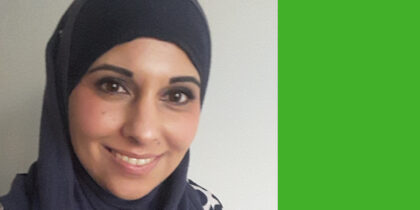

Andy Bell is joined by Danielle Bridge, Shoana Qureshi-Khan and Martin Bisp – three people leading voluntary, community and social enterprise (VCSE) sector organisations dedicated to tackling mental health inequalities. In this episode we discuss the structural barriers that can prevent people from getting the mental health support they need, and how community-based work and culturally competent care can help to tackle these injustices. This is the first episode in a two-part series supported by a grant from the British Association for Counselling and Psychotherapy (BACP).
If you appreciated this episode, we’d love your support to keep our work going – please donate today: www.centreformentalhealth.org.uk/donate
Listen to the episode on Spotify or Apple Podcasts. The full transcript is available below.
Show notes
- Find out more about Black Minds Matter UK
- Find out more about Nottingham Counselling Service
- Find out more about Empire Fighting Chance
Andy Bell (AB): Hello, welcome to this very special Centre for Mental Health podcast. My name’s Andy Bell. I’m CEO at Centre for Mental Health, and I’m delighted to welcome you to the first of a two-part series, where we’re going to be exploring how to tackle inequalities in mental health by listening to the experiences and knowledge of people who are leading voluntary community and social enterprise sector organisations, and those with living experience of using those services. We’d like to thank the British Association for Counselling and Psychotherapy (BACP) for supporting us to put this series together, and I’m really delighted to be joined by three really, really knowledgeable and brilliant people for this conversation. So, please welcome Danielle Bridge, who is chief executive of Black Minds Matter, Shoana Qureshi- Khan, who’s the chief executive of Nottingham Counselling Service, and Martin Bisp, who is the co-founder and executive director for global partnerships and impact at Empire Fighting Chance in Bristol. Really great to have you all here, and it would just be lovely to start with, to hear a little bit about your journey to your roles and what brought you to it, and perhaps any of your background you’d like to share, and if I can maybe start with Danielle.
Danielle Bridge (DB): Hi Andy. Thank you so much for having me. It’s a pleasure to be here. So, yep, so I’m the chief executive at Black Minds Matter UK, and I started my journey at Black Minds Matter UK in a very interesting way. Prior to working at Black Minds Matter UK, I was the founder and CEO of a social enterprise, which was founded in 2010 and I spent many a happy year there building that organisation that provided physical and mental health first aid training to the society. At the time, I had a little bit of spare time, and so decided to apply for a trustee role at Black Minds Matter UK, and within eight weeks I was asked to become the interim chief executive of Black Minds Matter UK, and that was because of the fact that the organisation was founded as a Go Fund Me campaign after the murder of George Floyd and the Black Lives Matter movement. As an operational trustee, I was giving my advice around how we should be thinking about building from a Go Fund Me campaign into a fully fledged charity. And the founders at the time both moved on, and I was asked to fill the gap, so it was a very interesting kind of birth into my role here, and something I certainly wasn’t expecting, but something that I kind of grabbed with both hands.
AB: Wow, that’s amazing. Thank you. Shoana?
Shoana Qureshi-Khan (SQK): Hi, again, thank you for having me here to be part of some exciting conversations. So, yes, I’m the chief exec of Nottingham Counselling Service. When I think about my own journey into this position and the journey I’ve been on in the last few years, I would definitely recognise that whilst I’ve had a 30 year sector-wide experience with working with vulnerable adults from all different backgrounds, what I’d say the last 10 years has definitely given me is a fire to do work in a direction that looks at healing recovery and the inequity in society, and how we rebalance that. I suppose the last five years also gave me a momentum and a desire to do something with real impact. Being part of a local organisation lets me drive change and influence wherever I can, and it’s been, it’s been a journey, it’s been a journey, and it’s been hugely rewarding.
AB: Thank you. Yeah, it’s great to hear. And one of the things about our sector, which I think is so important, is that ability to both provide the services you’re providing, but also be a voice for social change, and how significant a part that is of what we do, and sometimes is lost in the translation of public sector contracts, and you know, how many people have you seen? What have you done with them? What impact? What KPIs, all that kind of thing. So, interesting to think about that. Martin?
Martin Bisp (MB): Hi. Mine was an accident. I’m not going to pretend otherwise. So, I was an analyst for investment companies, I boxed as a kid, and then I came back to… my wife was pregnant, actually, with our first daughter, and I wanted to get fit. Tried a commercial gym, hated it, decided I was not too old, contrary to what she might have thought, to box again. Had a car crash, couldn’t box, started running the amateur club. Truthfully, I was sat in the gym on a Friday night, I looked out the window, and I saw two young men that I vaguely knew in a place called St. Paul’s in Bristol, and they were dealing drugs. I went over and had a conversation with my co-founder, and we were like, “Well, what are you doing?” And it was like, “Nobody cares, we’ve got nothing to do, we can get a job.” We’re like, “we care”. Took them back into the gym, did a boxing session, said the gym’s yours, come back whenever you want for free, we’re not going to charge you. They came back on the Monday. There were 4, 6, 8, 10, and within six weeks we had 50 young people coming five days a week. And truthfully, I suppose it all changed maybe six months after that, when we had two things that happened within two weeks. One was a young man that was going to be excluded from school. We couldn’t get our heads around it. He would turn up, he would tidy the circuits up, he’d stay around at the end to talk, and eventually we kind of said, “What’s going on?” And he said, “I just don’t understand maths. So, when it’s a day when it’s a math class, I do everything I can not to be embarrassed. I kick off, I don’t turn up.” So, we did some basic numeracy to keep him in school. And the second one was, he had a young person referred to us, who I remember, I rang the schools 2006 to be fair, and I said, look, they’re not naughty, they’re just not well, they need some support. And there was a conversation about, we don’t really know what to do when I’m off site. And then with breathtaking naivety I rang CAMHS to try and make an appointment, and then I realised how tricky this situation was. And Jamie and I decided then and there we were going to do something about it, so we started to try and build programmes that made a lasting change, you know, we’ve grown and we’ve grown, and now, whatever that is, 19 years later, we’ve got three programmes with about 2000 young people a year in Bristol. We’ve got 140 partners across the UK that deliver our programmes, and we’re starting to work in North America. So, but it’s all been a total accident.
AB: It’s an incredible story, and amazing to hear about that. And perhaps, perhaps, while, while we’ve got you. If you could tell us about how Empire Fighting Chance works, and a little bit about the young people you work with.
MB: Yeah, so we use, sometimes takes some explaining, but I would call it non-contact boxing. So we use boxing training, so nobody ever has to hit each other, and it’s underpinned by psychology and therapy, basically. So what we’re looking to do is engage young people, I think, where they’re at in their community with an activity or a session that’s cool. Nobody’s ever embarrassed to be in the gym, nobody’s embarrassed to sort of come to a boxing gym. So, what we do is we lead with boxing’s credibility, we underpin it really by intensive support, whether that’s psychological support or therapeutic support, and who do we work with? I suppose it comes into a number of categories. I mean, we do work with those that are involved in urban violence, so we might be working with those that are on the front line, involved in sort of gang activity. We try and do stuff around school exclusion to stop schools excluding the young person, and we’re sort of saying to them that please let us work with them before you go for the exclusion, and we do a lot of work where we get referrals from parents, CAMHS, whatever it might be, around those that need mental health support that can’t access it. So I guess we’re trying to work with those that can’t ordinarily access support, or aren’t able to afford to support, or don’t have the equity in the system to get the support they need in order to progress.
AB: Thanks, Martin. And something really strikes me about the way that so many of the services we see that are really making a difference are taking that kind of whole person approach to mental health, that mental health is more than your psychology or your emotional wellbeing, it’s about the things happening in your life, and what’s going on, and the struggles you’re dealing with, and so often when politicians or media commentators want to denigrate mental health, they try to kind of say, well, it’s just life’s ups and downs, and it’s really important to understand that actually it is about the whole of our lives, but it’s also really serious and really important that people get that kind of whole person support. So, Danielle, tell me more about Black Minds Matter.
DB: So, Black Minds Matter UK, as I mentioned before, was born after the murder of George Floyd, and at the time, if you think back to six years ago this year, wow, all eyes were on the Black community, all eyes were on the disparities of health care as well as mental health care for Black people specifically. And as a result of that, the organisation was born to address the gap in terms of Black people accessing mental health support, so it was if people went down the route of accessing support in the, you know, the previous model of IAPT, then it was very rare that they would ever have access to a therapist that looked like them, had any kind of lived experience about what they’d been through as a community, and as a result of that, the organisation was born primarily with the aim of matching Black people to Black therapists. Now, at this point, I think it’s really important to recognise that Black people are not a monolith. We’re all very different. We come from different parts of the world. I’m from the Caribbean, for example. We have lots of our, you know, community from Africa and other parts of the of the world. And as a result of that, our unique position, I guess, is about matching them to not just their psychological needs, but also for their cultural needs, because there are certain transactions in therapy which talk to how you’re brought up, how you speak to your elders, you know, how you show up in community, and I think without that nuance in mainstream services, then therapy can sometimes not work right. It doesn’t get to the root of the issue, and so BMM UK addresses a very specific gap. Black people are not getting access to equitable support in mainstream services, and as a result of that, we connect Black people to Black therapists in order for them to start their healing journey.
At the same time, what’s also important to recognise is that mental health, the stigma that is attached to the term mental health, is, you know, widely felt, but within our own community we have our own barriers, you know, mental health isn’t recognised in certain parts of our community, it’s not talked about in certain parts of our community, and as a result of that, what we’re doing is creating awareness around mental health and mental illness, specifically within the Black community, and then if you add the layer to that, we’re then talking about how your lived experience, what you talked to earlier, Andy, how that affects us as a community, you know, institutional racism, biases in community, etc. etc. How do they then, you know, underpin the challenges that we have as a community going forward? So that’s the awareness and education piece that we do, and then finally the advocacy part, and that for me is the most challenging part, because that’s talking about why we are needed in the first place. And it wouldn’t surprise you on this call, I would imagine, to know that sometimes just talking about our work can cause some serious issues, because we have people saying, well, why you need it, why do you need special treatment, why do you need, you know, a special pathway into services? So an awful lot of that is about advocating for the need to have therapy that is matched by the needs and the lived experiences of the community to which it serves, so a lot of that is about us translating impact, you know, to policy makers and making sure that when policy is being written, then it takes into consideration those most harmed in current services at the root of, you know of its inception. So that’s where our advocacy work kind of begins. So three main pillars: therapy, awareness, and advocacy for the Black community.
AB: That’s amazing, and it’s clearly the combination of those that really make a difference, because you’ve got all those different ways of working, and again, it’s not putting it down onto the individual. Health is about community, it’s about our collective identity, it’s about our experiences in the places we live in, and our families, friends, you know, wider, wider range of people we identify with, and so important to think about it in that way.
DB: Absolutely, thank you.
AB: And Shoana, tell us a bit more about Nottingham Counselling Service.
SQK: Hello. Nottingham Counselling Service will be 50 next year, and its inception was around the voluntary sector organising. So as we’d come out of post-war Britain, organisations were slowly recognising there were fractures within society that needed a lot of additional work, whether that was education, family sources, or therapy. So the last 18 years of the organisation, or the last 20 years, the previous chief executive was a Black man, and had led the organisation in dealing with access to therapy, so there was three functions to the organisation, and we still do that strongly today. So, access to therapy as a human right, access to therapy for everybody, and the inequalities around race. Access for people from marginalised backgrounds, from diverse backgrounds, from racialised communities, it’s entrenched that services are not trustworthy. So it’s really proud for an organisation like NCS, which is on the tin, it looks like a generic low-cost charity that is promoting accessible therapies. However, when we look inside, we’re providing services to racialised communities, asylum seekers, refugees, people living in social housing. So, for me, we’re covering all areas with particular specialisms, and for me that’s very different to probably a lot of other models up and down the country, and it’s great. It’s great working in that environment, but it is hard to do the advocacy bit, because Danielle’s right. It, and I don’t know if she was pointing to this bit, is in this current environment, when you talk about one area, there is a loud voice that is in our homes on a daily basis, going, they are getting more, look at them, and that’s very difficult, but what no one understands is that the level of complexity around the health inequalities and the mental health inequalities for those groups. So it’s great we’re having this conversation today.
AB: Thanks, Shoana. It’s wonderful to see that you’ve got organisations that have been around for half a century and others that have been formed more recently that are able to really work on the inequalities we’re talking about, and we’ll come on to that more in a minute, and get more of your thoughts about how they work, but it’s also interesting that all three organisations have come out of some kind of crisis, whether it’s the Second World War or the murder of George Floyd, or a specific example of something happening to a young person. It’s really important, what that catalyst is, isn’t it? And fascinating to see. So this is a question for anyone who wants to answer it or give some thoughts on it. How do inequalities like poverty and racism, but not only, affect the mental health of the people you work with?
SQK: I’m happy to go on that one. So, the fundamental difference is people from minority backgrounds are much more likely to suffer from an enduring mental health condition in the UK than they are in their home countries. Why is that? And what is that? Because in every country there’s a level of poverty, so what is it that intersects here, which is very different. I suppose the baseline is very different, so poverty for them coming into the country, they’re coming into systematic areas of where discrimination is inherited, so even if I think about my parents coming in the 1950s they came with no passport, they were invited into the country, but they started with nothing. So these communities are starting with nothing, and usually it starts with shared housing, some of the poorest areas, poorest levels of education, and all of the undercurrents of the micro aggressions of discrimination add to the levels of mental health you will experience. So poverty puts your intersection on the back foot, and it doesn’t come in one particular guise, it comes from a place of struggle, difficulty, lowest economic areas, poorest education rates, some of the most complex schools around you, access to health care, longer waiting lists, so all those different sections absolutely affect your mental health as a minoritised community. And then, in addition to that, whilst you’re living in those communities, for some reason, you are still completely socially isolated, you feel disconnected, you don’t feel a member of society in the same way. So for me, when you look at these rates and you compare them to, so even if you look at people from the Caribbean, they’re more likely to be diagnosed with schizophrenia here than they are in the Caribbean, and it’s not because the Caribbean aren’t diagnosing it, it is because the discriminatory factors are adding to that, the poverty factors are adding to that, and the research is so clear and definitive on the impact that has on individuals. You’re more likely to come into a mental health service if you’re a Black man through an arrest. There’s so much systemic, so many systemic failures that we’ve got to still address, and we’re probably not scratching the surface yet.
AB: Thank you, Danielle or Martin?
DB: So, when it comes to poverty, racism, and mental health, we need to understand that racism isn’t an experience, it is a chronic stressor and a trauma for the Black community, and for any minoritised community. It shapes how they are viewed in the world, it shapes how they see themselves in the world, how they feel, how they, and how they’re treated. You know, I have two children, and to try to explain to them that they are going to be potentially treated in a way that is unfair, based upon the colour of their skin is something that lives with me on a daily basis, and it’s devastating, especially now in 2026. And so then, if you layer poverty on top, housing insecurity, unemployment, financial stresses, what you get isn’t just poor mental health, but chronic debilitating mental illness that’s stacked up over time. And so the system responds too late, and when the system does respond, it’s not fit for purpose. It doesn’t take into consideration the nuances and puts everybody on the same platform. You know, if you need mental health support, you just access mental health support without taking into consideration the nuances.
AB: I think when we talk about poverty, what we often mean is impoverishment. Society is creating poverty for certain groups of people, and in some ways that’s an active choice. I mean, it’s now thankfully been been abolished, but the two-child limit was a means of impoverishing, particularly families from minoritised communities. Just was. It’s very hard to see it as anything other than that. Martin, what are your thoughts on this issue from the experiences of the young people you work with?
MB: Not much I can add. I mean, fundamentally, we’re dealing with young people that have no equity in the system, you know. It’s as simple as that. They don’t, they can’t access education support, they can’t access mental health support, they can’t access good housing, they can’t access good jobs, you know. So, the narrative we build in these communities – and Bristol is brilliant, Bristol is is a tale of two cities. You’ve got the wealthy Bristol, which is a fabulous place to live, and you’ve got the Bristol that’s poor, where there’s the lowest social mobility of any major UK city. So, if you’re born poor in Bristol, you’re probably going to die poor in Bristol. And Bristol talks about itself as a tech centre, with these two world-class universities. What good’s that for the kid that walks through this door that doesn’t know anybody that’s been to university, that hasn’t got a laptop, hasn’t got any access to technology? And so I suppose what we see is, in fact, I go a little bit further without upsetting too many people, is that I think that we’ve got a system that structurally harms us. You know, arguably mental health services are designed by white middle class people for white middle class people. I’m a working class kid that would never want to access the services that I read about and I see. Why we invented boxing therapies, we were speaking to somebody who said I’m not going to go see my therapist, and we’re like, well, why not? And it was like, she’s Margaret, she’s 65 she lives in a posh area, Bristol. What does she know about my life? And I guess you know, when I see what I see around us, and I sort of look back on my own life, and I guess I see a system that structurally harms us, truthfully, you know you’re not supposed to succeed, are you? And there’s that stat that shows that working class and middle class professionals with the same qualifications, the middle class professional earns whatever it is, like £7,000/10,000 more a year, so whatever happens, we’re never catching up, and we’ve never got anything that’s designed to let help us catch up. So that’s why I see a complete lack of equity, a complete inability to access the support that privileged counterparts can access, and therefore can kind of blossom and bloom.
AB: Yeah, thank you. It’s really interesting, and again, important to talk about class as well, you know, and how it intersects with race and other forms of inequity, because it’s there. If we pretend it’s not there, we’re largely kidding ourselves. So, Martin, you spoke a little bit about this, and I think it would be something that’s worth exploring a bit deeper, is around the barriers that actually stop people getting access to mental health support, particularly those who do experience the most profound structural inequalities, and I think you’ve all mentioned this a bit, but it would be useful to explore how some of those barriers work, and maybe thinking about how your work is attempting to overcome some of those barriers. I’d be really interested if anyone wants to pick that up.
MB: I mean, I think for us it’s accessibility, you know, one of the things you look at, how high the CAMHS threshold is, for example, you know, and what we seem to be great at this country is world class at dealing with crisis only, which strikes me as best inhumane. I come from a corporate background, you know. This boxing was a hobby that led to this job. And what business in the world waits until the problem is at its most difficult to solve before it tries to fix it? No business in the world does that, but we think it’s okay for people. We think it’s okay not to try and make life easier and, let’s be honest if we want to make an economic argument, less expensive. Let’s wait, let’s wait, let’s wait. Oh my god, we’re at crisis now. We’re going to have to hope for the best, you know, it’s inhumane. It just shouldn’t be allowed to occur, and, and I guess from my point of view, if you can afford to pay, then you can afford to shortcut that crisis point and access support earlier. And I still struggle all this time later. I still struggle with the concept that we’re not prepared to create and invest, and I know we talk about it, but heavily in community-based organisations. We know that in our case, young people want to go with and trust those that live where they live, you know have walked the streets, have the same kind of social capital that they’ve got, that’s what they trust, and that’s what they believe in, and that’s why they’ll turn up. They’ll come to a boxing gym because it’s in their community, because it’s cool, because they see people who look like them that have been through their life experiences, so they want to access their therapy through here. But we don’t do it enough, do we? And we keep making centralised decisions, you know, and I get it. I think we’re the most centralised country in Europe, and that’s great. Every community, even in Bristol, those that are part of each other are completely different. And unless we look at those nuances and try and find services that sort of are culturally competent, deal with class and race properly, then we’re always just doing the same old thing, which is waiting till crisis point, hoping we can fix something, costing us a fortune, not working with enough young people, not working with enough adults that need support, and at no point are we putting in place the structural changes that we need and the early prevention stuff that we need in order to kind of equalise society. You could argue that’s deliberate, I wouldn’t be so controversial on this, but you could argue that’s deliberate, and in fact we are trying to deliberately harm those that haven’t got equity.
DB: I love that, trying not to say it. Yes, it’s on purpose, right? It does, because it feels as if it’s 100% on purpose. I think, in terms of us and barriers to access and support, mental health support as a whole is overwhelmed, right. We’re talking about 38% apparently, there’s a 38% rise in access for community mental health demand in recent years, which puts a massive strain on an already strained system that’s not working very well. I can only speak about us in terms of accessing mental health support, and that’s trust. Black people do not trust services at all, and they have been shown so many reasons to not trust them that they, you can’t blame people for not wanting to go into services, they would rather become very unwell in community than go and seek early support, because of the lack of trust. Shoana mentioned earlier on that Black people are more likely to be detained under the Mental Health Act, through, you know, through coercive measures, and that’s true. You know, Black people are more likely to have a CTO attached to their case after mental health support than any other, you know, community group in the UK. 136 detentions, which were detentions, you know, based upon police interventions, were often used for our community, and I know that that has changed in recent years, but the problem with that is, then who goes, you know, if there is a concern in community, who is the person that we call when there is somebody who is a danger to themselves? What services are there now to support them and to help them? If you are unwell and you see somebody chasing you down the street, and those people are police, people are petrified by that, absolutely petrified, because people have lost their lives, and that’s not a belief, you know, in their heads. This is a real situation that people from our community have faced time and time again. All we’ve got to do is look at the inquest numbers to understand inquests into, you know, deaths in police custody that affect our community.
So, there is a distinct lack of trust in services for the Black community, and that for me is one of the major barriers to support. The third one, I think, is what Martin spoke on earlier, is that relevance, you know, why on earth am I going to go and speak to somebody who has no idea about my lived experience, and even if they have entered into services, some people will “fail”. That’s in inverted comments, fail at their therapy because they have left therapy early. Now, statistics might say that, well, they were just not engaging. What they don’t say is because there was no cultural relevance whatsoever in that room, which led that person to believe that they were actually being more harmed than they were being helped in that room, and as a result they felt, no, you know, they felt it necessary to end their therapy early. So those nuances, I think, are really key when we’re having these conversations to understand why there is often disconnect, or at least a removal of certain people in therapy, which is designed to help people, perhaps what Martin said, middle-aged wealthy white people, and they will remove themselves because they don’t, they’re not seen. And then, obviously, cost – cost is an absolute barrier. And so, at Black Minds Matter UK, what we’re doing is, yes, offering free support for those people that cannot afford it, but we’re also offering subsidised price points for those people that can give a little bit, and a full paying service for those people who are privileged enough to pay for it, with the knowledge that when they do pay full price, then that money’s going back into the community, you know, to be able to offer help and support for those people that can’t afford it. So they are the barriers that we are seeing, and I think actually outside of the financial capability or incapability, it is trust for us, absolutely, without a shadow of a doubt, trust is the main barrier to access and support for the Black community.
AB: Shoana, what about you? What’s your experience?
SQK: The trust element is so key for me, because when they walk through that door, they need to know that that person isn’t going to need 10 sessions on just understanding their dynamics. What I hear so many counsellors now tell me that the client has sat there and said, I’m so glad you’re from another minority background, because I don’t have to explain certain things to you. And what’s really interesting is almost every person that’s come through the doors also talks about race and discrimination, so that those areas we can’t ignore, and yes, it breaks my heart when I hear people from poor economic backgrounds or diverse backgrounds say, I never knew this could be a place for me, I just thought it for was for rich people or middle class people, not people like me. And Martin’s right, I despair at crisis intervention, it takes longer for recovery, outcomes are slower. Early intervention has got to be the way. And for me, after working 20 years in mental health, therapy absolutely can support it. And it’s not a lone model, it needs systems around it, especially when your circumstances are more fragmented around you. You need structures around you. So if you want us to advocate, if you want us to raise the voice and the bar on this conversation, then there needs to be adequate resource there. And for me, I have the privilege of training therapists, and it’s wonderful seeing more diverse therapists coming through the door wanting to become therapists, but again, their journey into therapy isn’t easy, and they also experience a lot of discrimination along the way. So we’ve got to understand all these parameters and really address them, because if we want representation, we need to make their access into the service easier.
AB: Thank you. One of the things about trust I’ve noticed is a lot of conversations with public services tends to be how can we make people trust us more, and it tends to be seen as a task of communication or persuasion, rather than thinking, how can we make our service more trustworthy among people who don’t currently, and I think that’s an interesting shift, that while we’re definitely having a more thoughtful conversation about racial injustice in mental health, I’m not sure we’ve yet kind of got past that notion that trust is something you can just kind of persuade people to have.
DB: Yeah, I agree. And what’s really interesting, what you’ve said there, Andy, is that there seems to be still a narrative that you know tell us what it is that we need to do, and actually, from my point of view, right, well, no, if you can’t think about what equity looks like from inside your organisation and start to understand, do the work required to understand what equity is. I mean, really, you know, then again, it’s that kind of labour that’s put upon those people most harmed to be able to come up with the solutions that, if you are truly equitable, and I mean equitable on all layers, then it takes work, it takes listening, it takes understanding, and it takes implementation with that at heart, right?
AB: Yeah. Thank you. Really important points, I think, and the resourcing one, Shoana, that you brought up, I think possibly connects with the next question on my mind, which is about what are some of the barriers that may be standing your way as leaders of your organisations in tackling some of the structural inequalities in mental health?
DB: Just following on from what I’ve just said a second ago, and what Shoana shared earlier on: funding. One of the biggest challenges that we have as a Black-led organisation with and for the Black community, is that black square summer, as I call it, no longer exists. That original, you know, kind of uplift of care, uplift of interest, uplift of wanting to do something, you know, the world changed. I mean, this organisation raised £1.5 million over a summer in 2020 and I’m telling you now that that money has since gone, and we are not getting the same level of interest anymore. And I do appreciate that the world is very different now. We do understand that the landscape has changed. We also understand that the current landscape, as it stands especially over the pond in the US is absolutely having the effect on us as a community as well. And on two points for me, knowing that on an organisational level is one thing, but knowing it from a personal position again is something entirely different, because back in 2020 we all genuinely believe that this was a pivotal moment in society, that the society was suddenly becoming more equitable, it was suddenly caring more, it was suddenly going to do something, and to live through the realisation that that time has long passed, and in fact we are going doubling down on the original messaging that came before that is absolutely heartbreaking. From a financial point of view, trying to do the work, which means that we’ve empowered people to talk about mental health more, we’ve encouraged more people to go into therapy to get the support they need, and knowing now that we don’t have the funds to be able to help them is really, really difficult. And that’s the reason why I think for me the barriers that our organisation are facing are the realisation that that moment in time no longer exists, and actually now you’re trying to run an organisation with very, very limited funds, especially because when you’re talking about race, it tends to be a very strange and weird kind of thing in terms of the funding landscape. It’s quite a scary thing to kind of face really, so from us the funding absolutely is a massive barrier for us, as well as the barriers of trying to be there for the community. I mean, we had to pause our service when we had over, you know, 1500 people on a waiting list. There is no way that we’re able to offer 1500 people access to therapy free at the point of access. It was impossible.
AB: Thank you. There’s something really… it’s one of the fundamental things about our sector, is charitable giving and philanthropic activity. It is so bumpy, you know? You get moments when an issue gets a lot of attention, a lot of funding, but if it disappears a couple of years later, you offer something which you then can’t sustain, which you know, and I think it’s one of those real challenges as a sector that we have, that we just don’t have that constancy, and we have no way of kind of making it happen for ourselves. Martin, Shoana, any thoughts from you about some of the barriers that you face?
SQK: I would say from 30 years of working in public sectors, local authorities, larger charities, working at a grassroots level, you see firsthand how systems can change, you see transformation every day. You see that we are providing a service that has long lasting effects, and we are doing it on a shoestring. You’re doing it on a shoestring with goodwill. Even when I think about NCS, I think we’re a team of six paid staff, and then about 20 sessional staff, and we see 200 people a week, and we’ve got a volunteer base of 50, 60, 70 people at a time. It’s ridiculous. It’s genuinely ridiculous that the voluntary sector is just not given the accolade it deserves. I’m for the first time in my career, for the last 10 years, when I’ve been in this sector, I know what change looks like, I live it and breathe it and see it, but the investment in that sector is not there, and we’re all getting better at pulling our stats and data together, because we know that’s what they want, we can produce that, we’ve all got the capabilities, but again, yes, it helps, and yes you’re starting to recognise it more, but it’s real transformative work, and it deserves the recognition at a higher level.
AB: Thank you. Martin?
MB: I mean, there’s a degree of protectionism, I think, and rigidity about a system. Boxing therapy is a hard sell. It’s a hard sell, even though we’re using qualified therapists to deliver therapy, but just use boxing, like you might use play, or you might use art. Honestly, it’s a hard sell. Boxing, oh my gosh, we can’t be talking about that. So that’s a hard push. I think we’ve got, let’s be honest, we’ve got rigid systems that the change we’re talking about would be a generational change. It would be multi-year investment. We don’t look at any of those things, we talk about short-term solutions to long-term problems. The 24 hour news cycle probably doesn’t help, but if we’re talking about making systemic change, then we need to invest for the long term. So again, we’re tackling entrenched problems with a funding cycle that might end tomorrow, and we’ve got to go and get money again. And then you’ve sometimes got to create a newish project in order to attract the funding. So there’s this big power imbalance between, you know, what’s needed and what you can get, and then how you tell the story to what you can get. And that story also means that sometimes the larger organisations, and you know, we’re a reasonably sized one, we’ve got 40-50 staff, you know, you have to tell your story in a different way. You have to find different ways of doing it. But some of the work we do, there’s, you know, a bloke in the adventure playground with a pair of pads trying to engage young people on a one to one level. The investment needs to go across the piece.
AB: Thank you. Really, really interesting. And anyone listening won’t know that we all nodded our heads furiously when you mentioned about the need to find new ways of doing new things in order to attract funding for something that was quite good as it was anyway. So, before we finish, I’d be really interested to hear from each of you about one message you’d like to give, either to government or to people commissioning mental health services about what would really help, because I think we’ve heard so much about the value of voluntary and community sector support, we’ve heard some of the very significant challenges, obviously around resourcing, around workforce, around kind of structural things that hold us back so much, but I’d be interested if you had one message that you’d really like to be heard. It’s a cruel question, really, because there are lots, but I’d be interested in maybe one thing you’d like to say, maybe that you haven’t already, or that you just want to reinforce.
SQK: My message would be that investment has to be at a point of early intervention at the hands of the people who know their communities and their local areas.
DB: Yeah, I echo, I echo Shoana totally. So, if you want different outcomes, you need different approaches, that means long-term investment alongside those people who are already on the ground doing the work, because they know best.
MB: Can I go big? You know what I’d like? I’d like them to stick with us to invest in the long term, and then to back away and allow us to do our work. You know, a collaborative model where organisations work together, we’re funded for the betterment of the community, I bet you’d change the world.
AB: Thank you so much. I’ve loved this conversation, and enjoyed so much listening to your knowledge, your perspectives, and your passion for this. And I think some really clear messages have come out that are going to require some real change, and they’re going to require everyone to really do the work, and that phrase is going to resonate in my mind for some time. So huge thanks to Shoana Qureshi-Khan, to Danielle Bridge, and to Martin Bisp. I hope you found listening to this podcast interesting, and please do listen to our other one in this series, too. But in the meantime, thank you so much to our guests, and thank you all for listening.