
Why look back?
Each February, as LGBTQ+ History Month arrives, I return to the same question: why study history at all? Historians debate this endlessly, but for me, as a middle-aged gay man living with HIV who works in mental health research, the question is rooted in my lived experience. It is neither abstract, nor purely academic. It is about understanding why we, as queer people in all our astonishing diversity, stand where we stand today. How did we get here? What forces have shaped, and still shape, our lives, our communities, our fears, our joys?
I am also drawn to the stories that were pushed aside, only whispered, and often erased. I’m interested in the stories that never made it into the official record. What happens to a community when its stories are censored or silenced? What do we lose? What do we resist? And what traces remain?
History is not gone. It sits beside us and within us. It shapes the way we live, the way we see ourselves, and the way we understand others. For me, LGBTQ+ History Month is not simply a commemoration. It is a reminder that the past is still speaking.
History lives in the body
History leaves marks. It shapes how we think and feel, how we see ourselves, and how we understand our place in the world. The history of LGBTQ+ people is marked by long periods of shame, danger, and erasure. Laws punished love. Violence was ignored. Silence was enforced. These experiences do not vanish when the law changes. They settle in the body, in the mind, and in the stories people tell, as well as in those they cannot tell. The past is not distant. It is close to us all and shapes the ways we move through the world right here, right now.
Our histories are not uniform. Lesbians, gay men, bisexual people, trans people, and other queer people of many identities have all faced, and for many, continue to face, distinct forms of harm: institutional violence, discrimination, exclusion, and the denial of legitimacy. Many were told their identities were not real. Many were pushed out of families, workplaces, schools, and communities. These harms shape the present. They shape the way people navigate the world today.
The AIDS Crisis: A collective wound
The UK AIDS crisis of the 1980s and 90s is one of the clearest examples to consider. Many gay men lived with fear every day. Friends fell sick. Partners died. Entire social circles disappeared in a matter of months. The press responded with cruelty. The state turned away. Families cut ties. Support fell to friends who were themselves grieving.
AIDS was catastrophic, but it is only one thread of our history. Lesbians also faced policing and invisibility. Bisexual people were pathologised and dismissed. Trans people endured decades of hostility, exclusion, and violence. Queer families were denied recognition. Community spaces were lost. Joy was often overshadowed by fear. These stories also sit in the present.
The wounds we bear show themselves in many ways: withdrawal, anxiety, depression, thoughts of suicide, a sense of danger that never fully leaves. These are not signs of weakness. They are signs of what happens when communities live through fear, exclusion, and loss without recognition or support.
Strength, resistance, and collective solidarity
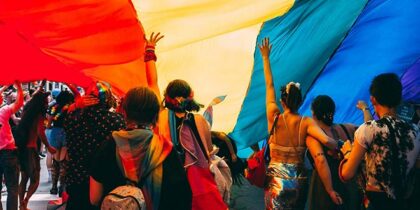
Yet the same history holds extraordinary strength. Deep friendships formed in the hardest years. Communities built networks of mutual support when no one else would step in. Pride rose in the face of hate. Art, music, and protest created new ways of being. Trans communities built their own structures when institutions refused to see them. Lesbians created spaces of refuge and resistance. Bisexual activists fought for visibility. These acts were not small. They were acts of survival, imagination, and love.
Why LGBTQ+ History Month matters
LGBTQ+ History Month gives us a way to look at all of this. It helps us see how the past sits in the present. The history of the AIDS crisis still shapes daily life. So do the histories of shame and pride, loss and friendship, erasure and resistance. These forces shape the needs of LGBTQ+ people today.
To understand those needs, we must look at the past with depth. We must listen to those who lived through it. We must honour their grief and their strength. Harm moves through time. Pride moves through time. The present is built on both.
History as a guide for the future
Studying LGBTQ+ history creates a guide for how we build safer, more inclusive environments. It can shape how we name harm and how we celebrate joy. It can help us imagine a future shaped not by fear, but by pride, connection, and dignity.
And at its heart, this work is about mental health and wellbeing. When we understand the histories that shaped us, we can respond with humanity. We can build systems that recognise trauma. We can create communities that strengthen belonging. We can acknowledge the many acts of resistance and survival that got us here. And we can work towards a future in which every LGBTQ+ person has the safety, recognition, and support they deserve.