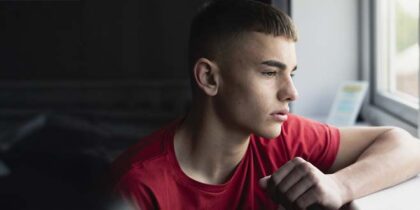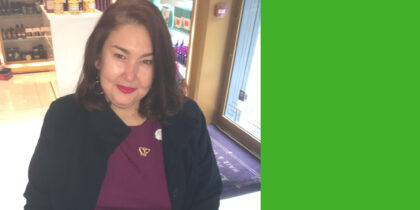

Andy Bell welcomes three brilliant guests to explore how to tackle mental health inequalities from the perspective of people with lived experience. Deborah Williams, founder of The Women’s Association, navigated postpartum depression following each of her pregnancies, but it wasn’t until her third postpartum journey that she found support. Christopher Egan is lived experience lead at We Are Survivors, where he draws on his own journey as a former client to advocate for male survivors of sexual harm. Sarah Rouse is a local councillor in Malvern, who after a lifetime of misdiagnosis, found self-awareness and self-acceptance through training as a mental health counsellor.
We explore the missed opportunities that prevented our guests from getting the right support, the things that have made a difference for their mental health, and how they are leading with lived experience to advocate for better mental health for all. This is the second episode in a two-part series supported by a grant from the British Association for Counselling and Psychotherapy (BACP).
If you appreciated this episode, we’d love your support to keep our work going – please donate today.
Listen to the episode on Spotify or Apple Podcasts. The full transcript is available below.
Show notes
- Find out more about We Are Survivors
- Find out more about The Women’s Association
- Find out more about the Malvern Hills Wellbeing Hub
Content warning: This episode includes reference to sexual abuse and substance use. Feel free to step away if you need to.
Andy Bell (AB): Hello and welcome to the second episode of our two-part podcast series exploring how to tackle mental health inequalities. This is supported by the British Association of Counselling and Psychotherapy. And my name is Andy Bell. I’m Chief Executive of Centre for Mental Health, and I’m delighted to welcome our three brilliant guests to explore this rather big and very important topic from the perspective of lived experience of mental health difficulties. I’m joined by Deborah Williams, who is the founder of The Women’s Association, an organisation dedicated to bringing a lifelong ecosystem that empowers women’s wellbeing, growth, and economic independence at every stage of life. A mum of three, Deborah navigated postpartum depression following each of her pregnancies, but it wasn’t until her third postpartum journey that she found support through Mum’s Aid. Deborah, it’s great to have you with us. I’m also joined by Christopher Egan, who is the lived experience lead at We Are Survivors, the leading charity within England and Wales, supporting male survivors of sexual harms. In this role, Christopher draws on his own journey as a former client to advocate for male survivors of sexual harm and support others in healing and recovery. Christopher, it’s great to have you with us. And we’ve also got Sarah Rouse, who is a counsellor in Malvern in Worcestershire. Working as a council leader during the COVID pandemic, showed Sarah just how deeply mental health, isolation and poverty and community support are all connected, inspiring her to retrain as a mental health counsellor and establish an affordable counselling hub in one of Malvern’s most deprived areas. Sarah, it’s great to have you with us too. So welcome all and thank you for being part of this podcast today. I’ll ask you a few questions and we’ll have a great conversation. So first of all, if you could tell us about your experience of mental health challenges and maybe what mental health means to you. We can start with maybe Deborah?
Deborah Williams (DW): Yeah, thank you for inviting me on. So I was diagnosed with depression at the age of 18. I struggled with depression probably since the age of 16, but didn’t have a name for it. And I also didn’t really know what to do with it. It was only when I started to develop migraines and that’s when I went to the doctors and that’s when the migraines was diagnosed, but also the depression was. So I didn’t actually go to get it diagnosed because I didn’t know that it could be. And then from that time, I think I didn’t really seek any help around it. They did offer certain things around medication, but they also suggested like, I was young, I could go to the gym, I could go for walks, et cetera, to help with managing it. And I don’t think I actually took any of the advice that I received at the time, just because, again, it just wasn’t something that was really spoken about, especially in my community.
And then it was only when I was pregnant with my third child in 2025, yeah, 2025 that I actually received support. And again, when I was going through postpartum depression, I didn’t really put a name to it because I didn’t know there was a name for it. I just assumed there’s so much hormonal stuff going on and so much that I was navigating that it was just normal. So I put it down as something that was normal. I did mention it to all of the midwives that I had for all of my pregnancies. It was only until the third time where someone actually put me forward for further support. And I think when it comes to the term mental health, I think the term itself is probably why it didn’t connect with me. Because obviously when you think of mental, it doesn’t feel like it’s, it didn’t, it felt heavier than what I was experiencing and like a stronger word. And then also it’s kind of like, how do you actually explain what that experience is? Because there’s some days where I felt perfectly fine and I would look perfectly fine. And there were some days where I wasn’t fine, but I just felt like everyone goes through those days where they’re up and down. So I think, it was very hard for me and still till now for me to identify with the term mental health. But it is and has been the reality of my experience till now. But yeah.
AB: Thank you so much. Gosh, there’s so much in that experience to digest and think about and how we identify with the term mental health is incredibly important, isn’t it? So thank you. Christopher, what about you? Maybe if you could tell us a bit about your experience and learning from it?
Christopher Egan (CE): Yeah, so I had a pretty great childhood until I was 13 and then I was sexually abused within the household. It was a distant relative. He used to stay with us for a month every year. And 1982, 1983, the world was a very different place. Homophobia was the norm or that’s how it seemed to be. I was already struggling with my sexuality because I was, I knew I was gay. I’ve always known that. It’s never been, there’s never actually been a problem for me. But that happening to me for a month every year for five years while going to an all boys school and not have, even if I could say the words, I didn’t have the words. So even if I’d felt safe enough to be able to tell someone and disclose, I didn’t know what to disclose. I didn’t know. I felt it was my fault, the stigma of it, obviously, guilt, blame, I mean, that’s what abuse does, while also learning very quickly how to survive that and how to navigate life. And then you make trauma-driven decisions based on that. So you’re then making decisions which you are responsible for, you are making those choices, but they are driven by trauma. They’re driven by silence and they’re driven by fear.
And you don’t make very good decisions when all that happens. So what I found I was doing and not even realising was feeling worthless, feeling somehow stained, feeling somehow people could see what had happened to me, being terrified a lot of the time, living in a world that didn’t say mental health, it said mental illness, not wanting that label. Never actually ever saying the words to myself, I need mental health support or I need support for what was then termed mental illness because all I was doing was going day by day. I didn’t even know that was a thing. I didn’t even know that was what I needed. And I masked things very well, but also what I did was just go from bad decision to bad decision and bad relationship to bad relationship and then ended up in a similar relationship in adulthood, replicating everything and being in a situation whereby I thought it was okay for someone to abuse me and I was in a domestic abuse, same sex relationship for many years.
And then drugs got involved because that’s a great way of masking your pain. It’s a great way of forgetting your pain. And actually, that becoming my best friend, so meth became my best friend in a foreign country on the other side of the world, in Thailand. And then finding yourself at the age of 33, 20 years after the abuse first started, alone, having escaped from everything, but actually being in a more sort of scary and dangerous position, but not even realising it and being arrested and finding yourself in prison on the other side of the world. And then coming out of that and me really feeling like I was walking on the same planet, but I definitely wasn’t living in the same world as everyone else and not knowing how not to be silent, so having been trained in her being silent. And then over the years, just it becoming worse and worse until 2018, 2017, I had a breakdown. And I don’t even want to call it that, my car broke down, it was an actual breakdown. But then within the process of waiting for the guy from the AA, I just had this swathe of, I don’t know, recollection of the smells of being out in the rain under this bridge on a motorway and this poor guy turning up and me crying and him sort of allowing me, him following me home to make sure I got home safe. And then phoning into work and not working for five years and finding myself having to start from the bottom up. And mental health now being on the other side of all that. I mean, my life is great and it is joyous and I feel all these feelings I never thought were possible, like happiness and joy and, you know, I embrace all that. But, you know, I now know what mental health is. Mental health is more than just sitting in a room with a therapist. Mental health is more than just being okay today. It’s about being able to balance the good days with the bad days and the difficulties with the things you don’t find so difficult and still being able to get up and still being able to feel valued and worthwhile and aware of all that, I would say, for a long answer there.
AB: Thank you. And thank you both for sharing that experience, but also for speaking up for people who don’t feel heard and whose experiences aren’t validated. So thank you for that. Sarah, what about you? What does mental health mean for you?
Sarah Rouse (SR): Well, I think my story is one of never feeling like I fitted in and always burning out, I now know. I’d get really excited about things, I’d get really involved in things, I’d become really passionate about them, and then it would just start to go wrong. I took over the, I ended up being a councillor with a C, I have to qualify which I am. Got very passionate about that, took over the council, became leader of the council, and I’d gone from being a cleaner to the leader of the council. And throughout COVID, it was just, it was an incredibly hard time, an incredibly time to be in a position of responsibility. And I then decided to train as a counsellor. And halfway through my counsellor with an S training course, my lecturer said, you do know you’ve got ADHD, don’t you? And it was like, oh, right. So having spent 30 years taking antidepressants and being referred to things and being told, you know, oh, you’re too much, you’re this, you, you, you know, it was suddenly like a moment of, oh, right. And then I’m a certain age, so you add a bit of menopause in there. And it just felt like the whole world was falling apart. So I think my mental health experience is one of misdiagnosis of being told, you know, you just need to do things differently. You need to take this medication where actually I didn’t. I was just being me and that was okay. But not learning to regulate, to not stop myself burning out, to not use alcohol, drugs, whatever it was, you know, just to make yourself feel a bit alive. So I think mental health for me, and Christopher summed it up so well there, is just being able to accept yourself and understand yourself and everything that’s happened to you and to be able to cope. My experience feels like a round peg in a square hole for 53 years and then discovering that actually it didn’t matter what shape the hole was and I was absolutely fine. And some days are going to be good, some days are going to be bad, but that’s okay. So I think that’s where I come from.
AB: Thank you. I think so many people have experienced that thing about being blamed for their mental health or neurodivergence and, you know, being told you’re too much. You know, you can see immediately that that is a way of kind of placing it on us as individuals rather than seeing mental health as a social thing. And it’s about our lives and relationships and environments and things. So thank you for sharing that. So I’m interested in what you feel has made a difference to your mental health and what has helped. And maybe, Sarah, if we start with you this time, what have you found helpful, either in the way of kind of formal therapies or other things that have actually kind of boosted your mental health and wellbeing?
SR: I think if I’m going to be absolutely honest for me, and seeing as this involves the BACP, doing my first level two counselling course was incredible. It suddenly, it’s all about self-awareness and about understanding yourself. And I’d done it on a whim because I thought, oh, that looks interesting. I’ll go off and do that. And that basically changed the direction of my life because I suddenly understood who I was and understood what was going on in the world. So I hadn’t had counselling up until that point. I just tried to get by on medication and that had kept me going, but I think it had numbed me. And if I could send everyone on that level two course, I think that would just be so helpful to people. From the experience now as a trained counsellor, it’s just being heard. So today I’ve taken three sessions counselling and I’ve run a support group and everybody in those groups and the time I’ve spent with people, it’s just having a space to talk. And I think it’s that, that’s the power, not feeling like you’re on your own for the people in the group, and just being heard. That to me is what makes a difference.
AB: Thank you. That space to talk is such a great phrase. I love it. Thank you. Deborah, what about you?
DW: For me, I feel like if I’m completely honest, I’m still trying to figure it out. I think it’s a day by day thing. Initially, I was very much someone that threw myself into work. So because I run my own business, after each of my children, I didn’t have maternity leave. I pretty much went back to work straight away. And that kind of helped because it distracted me. But then at the same time, it meant that so much wasn’t dealt with. And then if you then go back further to when I was 18 and all of that time, so much from then hasn’t been dealt with. And so I was really against counselling for a long time because I just felt like there’s too much to unearth and I don’t have the capacity to do that and still function daily. And because my assumption was I’m going to go there, I’m going to cry and I’m going to be told your time’s up and then I have to go home and function with all of that weight. So, yeah, so I was against it for a while.
And even when I did have the sessions, they were really helpful to help me process and help me develop mechanisms, but at the same time, my natural instinct is just to keep myself busy. So what’s helped me cope has been keeping myself busy and focusing on something that I’m building that is very purpose driven and purpose led. And the fact that I’m building something for others. But it’s also a distraction. So it’s both things. So I don’t necessarily have like a mechanism yet that has really worked. I also feel like if I was to do counselling again, I don’t envision a time where I would stop doing counselling because there’s just so much. Like in those sessions, I think I had between 9 or 10 sessions. And in those sessions, it was just like, there’s so much to bring up and there’s so much to talk about. And so much of what I’ve gone through has made me who I am today for better and for worse. And so it’s like navigating all of that and who do I now want to be is such a huge question when all of that is still there looming and hasn’t been dealt with effectively. So I think it’s just, it’s a day by day thing. Some days it’s the sun really, like seeing the sun come out. I think it does that for a lot of people, makes people feel in a really good space and helps with navigating the ups and downs of life. And then most times my kids really help because they just see in life through their eyes is really beautiful because they’re so innocent and so young and so excited by life. And then, yeah, then it’s work as well. So I’m still figuring it out.
AB: Thank you. And thank you for acknowledging the complexity that none of us is the finished article. We’re all learning every day and our lives are constantly changing. And also there may not be one thing that just works by itself. And the fact that you’re achieving so much through the work that you’ve created with The Women’s Association, as well as being a mum and having counselling in a sense, perhaps it’s accepting there isn’t just one thing and it might never be finished. So, you know, still more of a journey to go on. Thank you. Christopher, what about you? What have you found has been helpful for you?
CE: I think seeing me as a whole person rather than as a diagnosis or seeing me as more than my experience, but valuing my experience. I work for We Are Survivors now and I’ve been here for three years as an employee. But prior to that, I was a client for six, seven years. And what they did was they don’t just see you walk through the door and say, you need therapy. Yes, that’s on offer. And yeah, you can wait for that. But they engage you all the way through your journey. And I’m a great believer in seeing representation, which I never saw. So I never saw happy recovery ever represented. So if I saw abuse on anywhere being represented, it was a storyline to raise awareness. It was a storyline to start the conversation. It was a storyline so that if anyone was sitting at home, struggling with that or living in silence, they felt that they could pick up a phone and they could reach out for help or they could go and speak to someone. And that’s all brilliant and that’s all very, very worthwhile and everything. But what I never saw or rarely saw was anything that represented good recovery. And what We Are Survivors do is they have all these different activities you can get involved in. You can just do therapy if that’s what you want. You can be assessed, refer yourself in, be assessed or be referred in and then wait on the waiting list for therapy, like in lots of other places and they will check in with you and make sure you’re okay and all the rest of it, which is great. But then they do these other things and it’s in order for you to be able to see who you are, things that you’ve buried, things that you’ve possibly forgotten about, that your mental health struggles have possibly erased because everything else becomes so big and so noisy. that you lose track of who you are a lot of the time.
And what I was able to do was access the art. I laugh because I never did any art. I just stared at a screen and chatted. But it was a social thing. It was all done through Zoom when COVID started. And then, there’s something called the writing room. I’m now a published author. That came from, I mean, when I wrote my biography for this [podcast], everything I wrote in there has been achieved in the last three years. I’m 56 and that’s all been achieved since I was 53 years of age. And I’m really proud of that sheet of paper with all those things on it. But none of that would have happened had I not been seen as a whole person. And none of that would have happened had I not had support which allowed me to just be me and realise where my strengths were and to be championed in spaces that felt like championing me, that if I was worthy of that and suddenly, and also being able to turn up for myself, actively involved.
So peer support groups being able to, there was no expectation. It wasn’t like there was a therapist saying you’ve got 12 sessions or 20 sessions and if you miss a session or miss two you can be closed or if you miss two sessions it’s like your time you’re wasting there and it’s your time you’re losing. It was things that you can just turn up to as and when you feel like you can turn up to it. And then you realise you’re actively involved in your own recovery. But then also juggling that with, I had some, the last therapy I had, I’ve had quite a lot of therapy, was with the NHS and it was a lovely fellow who, and that’s the best way to describe him because he was so transparent with me at the start and I had had so many bad experiences I think, or several bad experiences. And he just said, we can’t deal with it all. And I’m going to be really honest with you. You just need to spend a few weeks with me deciding what you want to deal with. And if we need to ask for an extension on the amount of sessions you have, I will do that. And hopefully we will be granted that, but there’s no promise that will happen. And I got all that and I felt I had someone who really saw me and was able to just focus on the thing that needed to be focused on there and then, while I had all this other stuff going on at We Are Survivors. So this was this big… I never really knew it was happening at the time, but I wish I’d had it when I was 21, but I didn’t, and that’s fine. What I’m really pleased about is it’s there now for people should they want to access it.
AB: Again, some profoundly important themes there about being able to see that life can be better, that you can be a survivor, you can recover, and you can get your life back on your terms. And that’s really important. A question for anyone who’d like to answer this, really. You’ve all talked about ways in which inequalities in mental health manifest themselves for various different reasons across various different types of identity and experience. What do you think needs to happen in order to break down some of those inequalities, particularly in access to mental health support or indeed just having good mental health in the first place? And what difference can it make where there are services that are really attuned to people’s needs and again, particular kind of characteristics and experiences? Go on, Sarah.
SR: I think it was listening to Deborah and Christopher there, I was thinking that the 8 to 10 sessions counselling and that’s all you got, you know. And also, you know, about the wraparound service. So what I’ve just done in Malvern with some other counsellors is we’ve set up an affordable counselling hub in a football club in the area of real deprivation in Malvern because I didn’t want it to be a clinical place. I didn’t want it to be somewhere that you had to go, a doctor’s surgery or anywhere. It’s two rooms in the back of the football club and it’s those barriers that people feel that it’s not for them, it’s not the right place. So what I see as the way to go forward is to be able to get counselling in your community where you can walk to it or get to it, that you feel safe in. And to have as many sessions as we can. Obviously funding is the main barrier. I would love to give everyone that comes through the door as many sessions as they want and come back whenever they want. And we can’t do that because of funding. But what we are doing is working with all the local groups. So like Christopher was saying, you can come through the door and have counselling, but then we’ve got Men United and we’ve got a women’s group that we run. And we’ve got all the other groups that are happening and we’ve got working with people for hoarding. So if you happen to come through our door at the Wellbeing Hub, we will do everything we can to keep supporting you and you can always come back.
So for me, it’s very much that people can’t afford £60 an hour, let’s be honest, they really can’t. And actually, if you’re living in an area of deprivation, you’ve got poor housing, you’ve got financial problems and debts, you can’t get a job, what you actually need is wraparound support. So for me, it’s that bit where you can, like Christopher said, walk through a door and somebody sees you and the whole of you and tries to help you. So I think that’s where I am and that’s what we’re trying to do. And the biggest barrier being money. Give me £1 million and I’ll happily see everyone for 20 years, no problem.
AB: Thank you. And there’s something there about, first of all, being human, providing the support people actually want and need on their own terms. But there’s also that thing about therapeutic or mental health support being alongside other things because you don’t experience your mental health separately. It’s part of other things in your life. And again, there’s something really important about that we often find in a lot of our work. It’s, you know, you can’t separate out mental health from other things. What about either Deborah or Christopher, any thoughts from you on this topic?
DW: One of the things that I was thinking about is how people portray mental health or getting support, therapy, counselling in media. When I look for help or if I was to go online and look at therapy sessions or counselling sessions, a lot of the images that I see don’t represent me. And so then again, it would kind of put a barrier between me wanting to actually reach out and get help. And when I had a therapist from Mum’s Aid, we spoke about it quite honestly, because the reality of speaking to a woman who, she was a white woman, naturally it would seem as though we have nothing in common or that she wouldn’t be able to understand a lot of my experiences, because a lot of my experiences from when I was younger came from my background and being Nigerian. And in my mind, it’s like, how am I going to get you to understand that for you to then be able to help give me any kind of tips or advice or perspective? Thankfully, I kept going because after the first session, I was like, I’m not going back. We’re just two different people and I don’t see how this is going to help. But I did keep going back. My friends encouraged me to go back and it was a really amazing experience. But that was after I kind of let the wall down. And also it’s not lost on me that I had mentioned to all of my midwives in my first pregnancy, second, that I was struggling with my mental health and with postpartum depression, prenatal depression as well. And it was only during my third pregnancy, a Black midwife that actually said I’m going to refer you for further help, which I didn’t even know was possible. But again, I feel like that’s because she saw me and she was able to be like, actually, I think you do need more support and you do need more help. And everyone I saw up until the point of being allocated the therapy sessions were Black women. And so it was really comforting because based off of what I see online, I didn’t even know that there was a lot of Black women in that space anyway.
AB: Thank you. And I think both you and Christopher have spoken about representation and the importance that that really has. And that thing of being seen is so basic, but so fundamental. Christopher?
CE: Yeah, so I faced two huge barriers. So the first barrier, apart from obviously society and growing up at the time I grew up and it being a very different place and that male survivors aren’t really heard about in a lot of ways. But apart from that, when I was transferred back, I repatriated when I was, so I was in prison in Thailand, it was a drugs offence and I was repatriated to shorten my sentence because of my family and I was repatriated from Bangkok to London, to Wandsworth. And I arrived in Wandsworth and nobody assessed me and nobody sat down with me. And it’s hard to sort of vocalise, for no one to sit with you and ask you how you are. I never got asked, how are you? And then to sit with that for the next 9 or 10 months in two different British prisons and that wasted opportunity of me being able to have therapy within those spaces while I’m not doing anything else, I’m incarcerated. And this idea that you’re punishing someone again. And if only I’d had the chance to say what had happened to me.
And We Are Survivors, we run the Outspoken service in all the prisons in the North West, all the male prisons and one female, one woman’s prison, which is Styal. And most of the people who access our services, they’ve all experienced trauma and a great deal of them have experienced sexual trauma. And that was a huge barrier and I feel put me back years. And then when I was really unwell in 2017, 2018, I have a great GP, he was really, really helpful. And he just said, I’m going to get you a diagnosis because I just didn’t know what the problem was. And he asked for a psychiatric diagnosis evaluation assessment. And what I got back after waiting 8 months for an assessment was, well, you’re taking medication and you’re accessing therapy with We Are Survivors. So even if you had a diagnosis, you’re doing everything you need to be doing. So there’s not really any point. And those are literally the words I got fed. And to feel like, would you do that for someone who was suspected multiple sclerosis or cancer or any other illness? Would you say, well, we’re not going to diagnose you. What we’re going to do is you’re on this medication. We hope that’s going to work and you’re seeing a doctor. You would never do that. And that just made me feel, I get that some people don’t want labels, but I ended up with a diagnosis of PTSD through a legal, so through a court appointed psychiatrist. And when I got that diagnosis, it allowed me to get back through my front door and it allowed me to start being part of society again because it allowed me to be able to say to people, this is who I am and it’s not everything I am, it’s a small part of me, but this is why I am the way I am and why I sometimes have to face the day differently than other people do, where sometimes I spend an hour or two hours in the morning doing breathing exercise. You know, so I think barriers to mental health support when funding is so minimal and it’s easier for someone to say, or they need to say, we can’t assess you because of the cost, and you’re already medicated, so it’s fine. I think that’s awful. And I think it’s, and that’s not just happening to me, that’s happening to so, so many people.
AB: Thank you, so much there to think about. And I want to move us on to a question that I think I’d be fascinated a bit with all of your thoughts on this is you’ve all drawn on your experience to want to do something to make a difference to others. And I’m interested in maybe what led you to that and kind of how you decided to actually kind of take that step? Because it’s a big step to take.
CE: Initially, it was selfishly. I wanted to rewrite the narrative, the narrative of my life, because there’d been a bit of press and stuff and people who knew me and lots of other people knew I had been in prison and so there’s a judgment that comes with that, there’s a stigma that comes with that. I didn’t want the stigma, I didn’t want all that attached to me and I wanted to show people, well actually there’s reasons why I ended up in prison. So that was the selfish part but then I was assigned the peer support group as a client and there was a young man in the group and one day I decided to talk about how angry I was about the way the trans community was being talked about in the press and how it reminded me of being gay and being called paedophiles and being called predators and how we would teach children to be gay. And it was the same narrative that was being spun now about the trans community. And I was speaking about this and there was this young lad sat there and he’d been there a few times and I didn’t know anything about him. And he just literally said after, well, I’m trans and then started talking about himself. And then after he took me to one side and said, When you spoke, I knew someone had my back and in the few sessions I’d been there, I didn’t realise how much I needed that, but I just couldn’t speak before that. And that was a turning point because I thought that’s what I needed. I needed someone to do that and am I able to do that? And then I realised I was able to do that. So what started off very selfishly then flipped and I realised the value and the worth in that. And what I talked about before about representation, I just think not everyone can talk about what happened to them, not everyone should talk about what happened to them, but I do believe that you have to start these conversations and you have to show people that it is possible to recover. So those are really the reasons why I’ve done it.
DW: For me, the reason that I built The Women’s Association is because I went through education and didn’t really know what I wanted to do and then got to my final year of my first degree and I was going down the route of becoming an accountant. Again, just because I didn’t want to be a doctor, I didn’t want to be a lawyer, and accounting was the next idea of success that I was taught growing up. So I was like, okay, I’ll be an accountant. During that final year, I focused my dissertation on women in the workplace, specifically women in leadership positions. And what I didn’t anticipate was that so many women had gone through so many, some of the worst experiences that I’ve heard to date, from sexual harassment, from bosses to being passed over for promotions and so on and so forth. And so what started as a way for me to bring awareness to university students then became me building The Women’s Association.
In 2020, I had a really deep realisation where I thought about all of the women that had gone before us fighting for our rights and the fact that we often hear about all the amazing things they did, whether it was marching, whether it was chaining themselves to buildings or writing letters, writing statements to get us to where we are, but what we don’t hear about are the dreams that they left behind to do that. And how many more women and girls are leaving behind their dreams to fight for rights that should have never been taken away in the first place. And so I’ve built The Women’s Association with the intention of building a lifelong ecosystem, one that focuses on not only honouring and celebrating women and girls’ dreams, but also giving women and girls access to resources and information and support to help them make it a reality. So that’s kind of the reason why I wanted to do something to help. And I also say to people like, I don’t know what I could have done or who I could have become if I didn’t live in a world where inequalities existed. And so how do we end the cycle?
AB: Thank you. Wow. Sarah?
SR: I’ve been sitting here listening to everyone else and thinking, oh, how did I get where I got? And I think my real reflection is I grew up that if you’re a good person, you look after other people. You have to be nice to everyone. You have to help people. And it was sort of, if I’m really honest, a self-preservation thing. To be good, you help others. And then when I did my counsellor training, I was able to understand that I didn’t actually need to be nice and help everyone and save the world to be a good person. I don’t need to run a council and try and fix everything, and it was in that I was trying to make it okay to be me. And I’ve reached a place now where I just like being a counsellor with an S. I really enjoy that being able to support someone and sitting with someone and just that connection. So I do it now in part because it does make me feel good, because I love that moment where someone has a light bulb moment or they have a bit of inspiration or you just feel what you’re feeling. But I know it came from a place of judgment where you must be, you must be good, you must be kind. But I’ve been, like Deborah says, I’ve been bullied, I’ve been through leadership things, I’ve been mistreated, men have talked down to me like I’m stupid. I’ve had all of that. And now I do what I do simply because I want to. It’s got nothing to do with anyone else.
AB: Getting joy from it is just so important, isn’t it? ‘Cause it’s hard work and all the things you do are hard work. But it’s really clear that you get joy from seeing the difference it can make, that moment in someone’s life where you join things together and reframe things and think about things in a different way. And what a lovely experience that is to go through with someone.
One final question from me, and I’d just be fascinated to know, apart from sending a million pounds to Sarah at the Wellbeing Hub, what would your one message be to the Government or to services or to perhaps those in positions of power of whatever kind about how to support better mental health for all? I’m going to let you choose who goes first on this one because it’s a big question.
CE: Yeah, what I would say is if you really want services to support people that better, then stop designing support for people like us without people like us being involved, I would say. And something we say at We Are Survivors that I know is not invented by We Are Survivors, I know it’s been used by a lot of different places, but there’s no conversation about us without us. And I think that’s don’t just use us to tick a box. Ask us what is needed, fund it properly. Look at the benefit, look at the data, look at the cost that can be saved. And it’s not always about costs, the benefit to people’s lives, the benefit to their families’ lives, the benefit for the generations to come. The benefit, in my line of, survivors that haven’t been born yet. There are people who have not yet been born who will become survivors of sexual harm. I want them to be born into a world where they can easily access support and support that helps them to thrive and to live.
AB: Thank you. The nothing about us without us is a phrase that’s been used for a long time, but while we still need to say it, we still need to say it, don’t we?
SR: I was thinking there, as Christopher was speaking, it was almost the reverse, but exactly the same, is don’t ask for the evidence. We need to think about generational change and we can’t quantify that, we can’t prove that. So we’re doing counselling, we do little WEMWBS and we do it at six weeks, we do it at 12 weeks. But actually the change is if that parent comes to us, then their children and their children’s children may well have a better life, may not have sexual harm, may go into school, may have better housing. So I think my ask would be to fund the people that know what they’re doing, just like Christopher says, at the bottom in the communities and understand that it’s going to take 20 years to make a real change. We can’t do this in two years’ funding, we can’t do that. But what we’re doing for every person that we help, any of us, we’re changing generations. So I think I would say to the Government, give me a million pounds, leave me alone for 20 years and then come back and see what I’ve done and do that for everyone because we will change actual communities and we will lift people out of poverty and deprivation and stop housing issues and all of those things that they throw money at from the top. Let’s do it from the bottom up.
AB: Fantastic. Let’s do it from the bottom up. I love that. Definitely going to borrow that one. Thank you. Deborah?
DW: I’ve just been thinking about what that could look like and I’ve got two ideas that I’m going to kind of work out as I’m talking through them. So the first one is about being proactive and not reactive. I feel like so much of what we see around support is predicated around some level of trauma or like a huge negative experience that’s happened. And so now we need to throw money at it once things have got really bad. As opposed to like, for example, one of the schools that I worked in, they, we were approaching them to do work with them for a while. And they were just like, we’re okay at the moment. We don’t need any support at the moment until they came back. And I think it was in the 90s, 90 something percent of the girls in their school had reported that they’d been sexually harassed by the boys in the school. And then it was like, can you come in? Can you come in next week? Can you come in tomorrow? And that’s kind of how I feel the idea of support is at right now when it comes to people that are in positions of power. It’s just, we’ll wait until it gets really bad. But don’t wait until it’s a second person. When the first person has an experience and is brave enough to share an experience, let’s take it seriously.
And then the second thing is about the fact that I feel we really undervalue or devalue the contributions of people in society. If we really appreciated how much of society needed humanity, I feel like we would invest so much more time and money and effort and resources into making sure that people were really supported in the way that they need support. And so I think it’s just about putting yourselves in a position to truly understand what people are going through by supporting grassroots organisations and not just, as Sarah was saying, organisations that are that say, okay, we’ve got another 10 million pound pot of funding, but then it’s like the grassroots organisations never feel that pot. And then when it comes to what actually was done with that money, no one could ever really say. So yeah, so those are the two ideas that I had.
AB: Thank you so much. Wow. And don’t leave it late is again, we see it so often in the work we and others do that intervening earlier, and again, doing that in communities and really listening. And Christopher, it looks like there’s something you want to say.
CE: Yeah, I second that. And one thing I wanted to say was it’s not just about clinical interventions, it’s not just about therapy, and it’s not just about what society has always thought that’s what people need. And actually, a lot of people then feel that themselves, that I don’t need anything else. It’s about everything. It’s about housing, it’s about meaningful work, it’s about kids’ clubs. There’s just so much more that it’s about rather than like what has been said that someone’s trauma and how do we clinically deal with that? How do we medicate that? How do we, you know, all of that stuff. I’m not saying any of that stuff is wrong, but it is just such a bigger picture than that.
AB: It’s almost like people are three-dimensional, isn’t?
CE: Almost.
AB: Almost. I would just like to say a huge thank you to Deborah, to Sarah, to Christopher. You’ve shared so much of your knowledge, so much reflection on not just what you’ve experienced, but what you’ve learned through your experience and what you’re able to share to really help us to think about what the future could look like in terms of mental health support and the wider world around it, and indeed the inequalities in mental health that we are here to battle against. So I just want to thank you all so much for bringing that to us today and being part of this very special podcast. I hope you’ve enjoyed listening to this podcast and got lots out of it. And thank you for being here with us and huge thanks to our guests, to Sarah, to Deborah and to Christopher.