
Up to 70% of neurodivergent children and young people experience significant mental health problems at some stage of school. Prevalence of mental health difficulties is particularly high among autistic girls and young people from racialised communities. When neurodivergent children’s needs are not understood or supported by services, this can worsen their mental health.
Recent research from the University of York and summarised by Centre for Mental Health finds that standard mental health programmes often do not work well for neurodivergent children and young people. Many neurodivergent children find universal interventions like cognitive behavioural therapy and mindfulness programmes difficult and stressful. Others experience sensory overload or face barriers linked to language or communication. As a result, engagement is low and any benefits are often short-lived. Some children and young people feel pressure to hide their distress, which can lead to burnout.
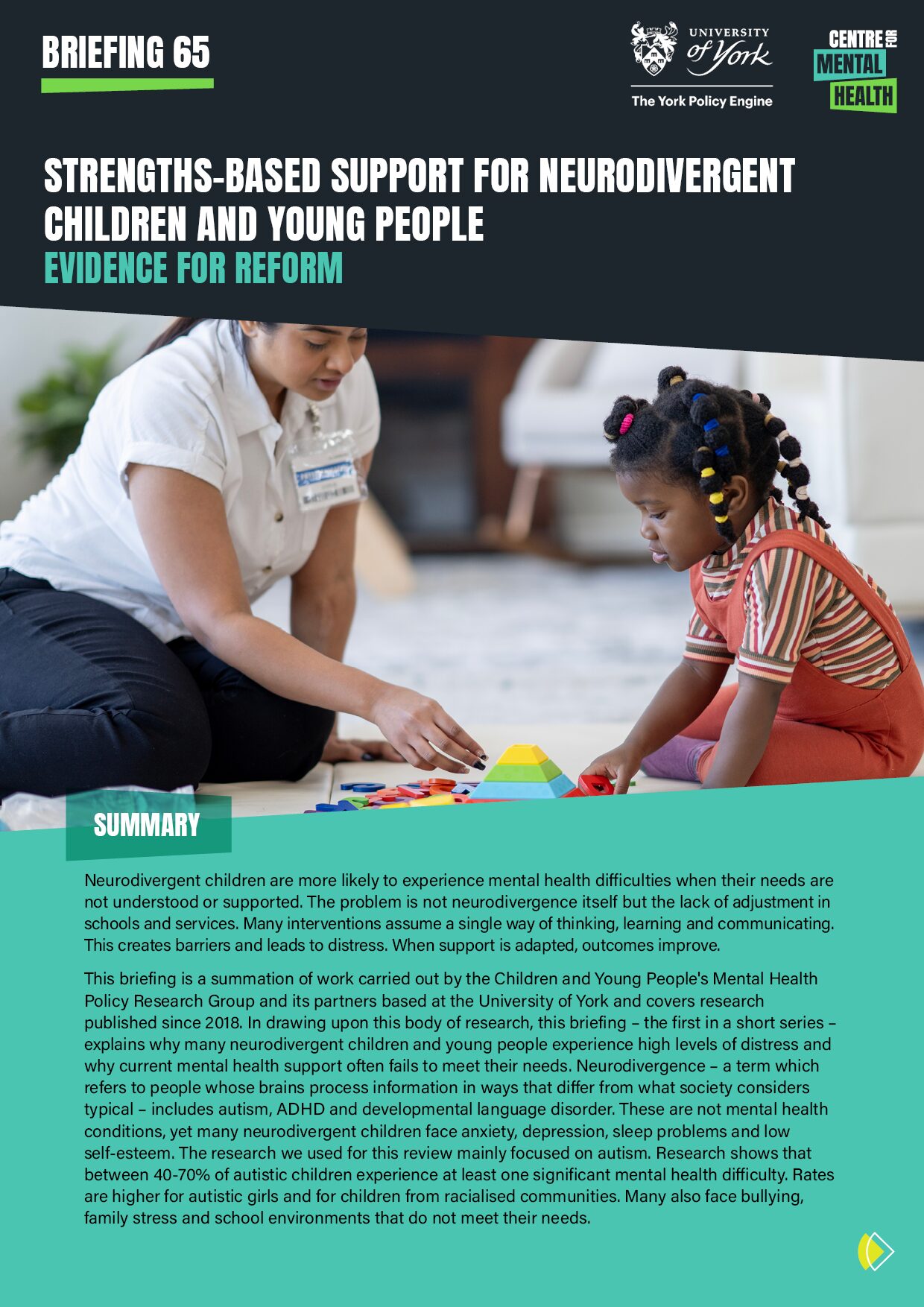
Strengths-based support for neurodivergent children and young people explores how adapted, sensory-informed and play-based approaches can improve engagement, wellbeing and mental health outcomes. It finds that approaches such as LEGO®-based therapy can support social interaction and emotional regulation by building on neurodivergent children’s strengths and interests.
The briefing calls for mental health support for neurodivergent children to be framed as a reasonable adjustment, not a treatment of difference. Mental health services should adapt to neurodivergent communication and sensory needs, rather than expecting children to adapt to services. Investment in sensory-informed and play-based approaches within mainstream education settings could help to improve outcomes for neurodivergent children and young people and reduce the unjust health inequalities they face.