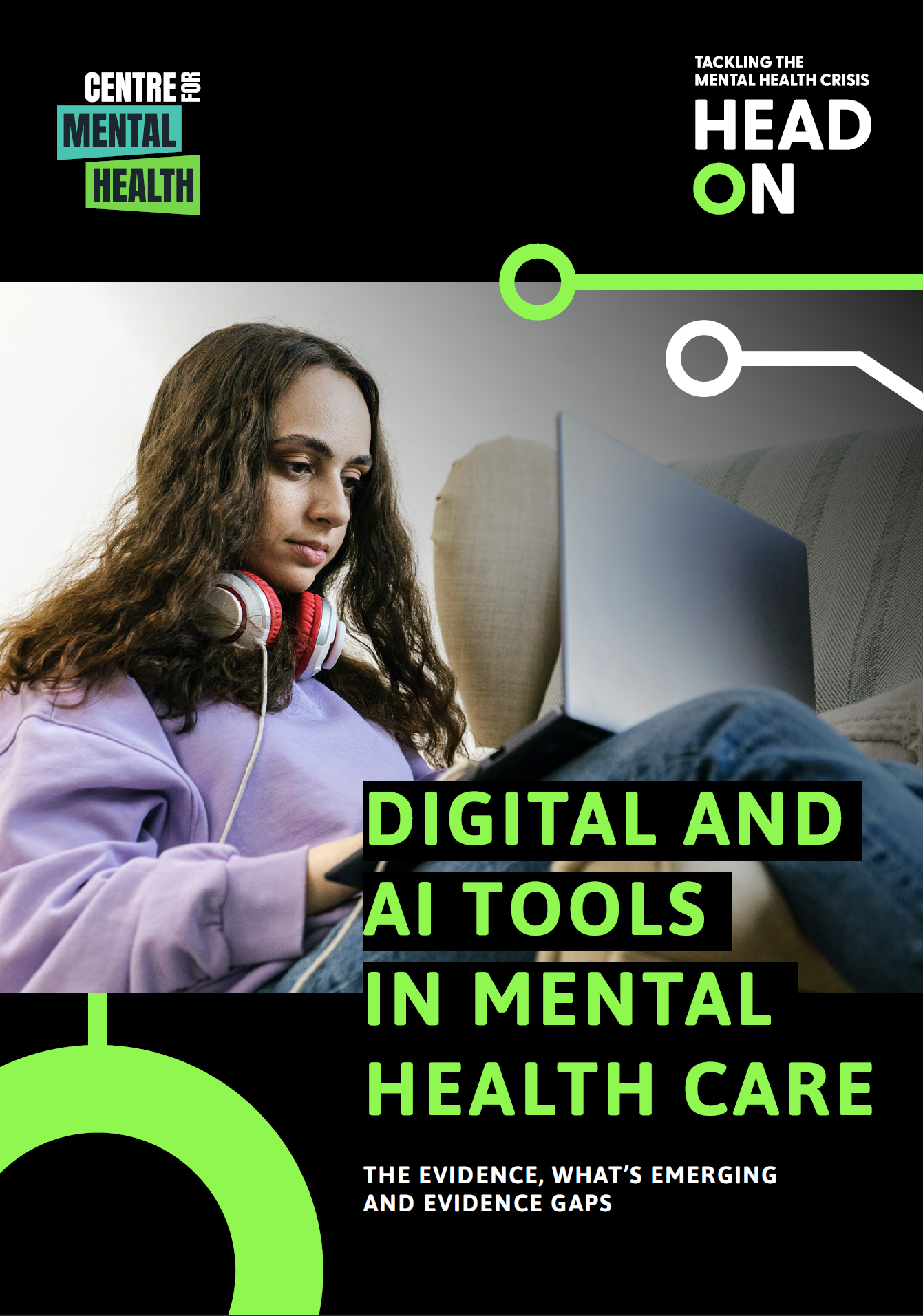

Increasing numbers of people are turning to AI for support with their mental health. While digital and AI tools have potential to improve access to support and treatment, use of these tools across all areas of life has led to debates around the ethical and social implications, as well as concerns around transparency, security and bias. The technology is developing faster than regulation is keeping up, and there is fear around what the future of mental health care will look like as a result.
This briefing draws together evidence from Head On members on digital and AI tools in mental health care to inform debates in the run up to the publication of the cross-government mental health strategy. Ahead of a comprehensive Head On policy paper to be published in spring 2027, this briefing aims to summarise the evidence that supports use at the time of publication and considers what questions remain about the digital and AI tools being used to assist, deliver or improve mental health care and support.
The briefing finds an established evidence base for digital and AI tools which support but do not replace human interaction – these can widen access to mental health support, help people who experience stigma access services and offer flexible, early support. These tools are used alongside human support and respond to a mental health need already identified by a support worker or clinician.
Tools should respond to identified needs and gaps in provision, with the aim of getting people effective and timely support. To avoid entrenching inequalities, new tools must be codesigned with communities.
The briefing is clear that we must not drift into a mental health system that is ‘digital by default’. Human relationships should always be part of and central to mental health services. There is an urgent need for more research, regulation and public guidance on smartphone apps and use of general purpose chatbots.
It is paramount that any use of digital and AI for mental health care is implemented safely and fairly. Among its ten recommendations, the briefing calls on the Government to:
- Accelerate access to new, innovative treatments, so that people with mental health problems can access what is most effective
- Regulate general-purpose AI, with clear safety standards, transparency requirements and accessible public guidance on risks.
About Head On
Head On is a coalition of over 20 leading UK mental health charities, looking to create a mental health system fit for the modern day.