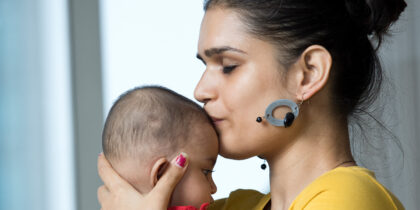

Specialised services for new parents who struggle to bond with their babies, help babies to thrive, but current provision leaves thousands of families without support.
A new report, ‘Why babies’ first relationships matter’ from Centre for Mental Health finds that expanding access to parent-infant teams could save billions, across health, social care, and education systems in the UK.
Secure parent–infant relationships underpin a baby’s emotional regulation, resilience, and healthy development, bringing lifelong benefits. A lack of a secure connection significantly increases the risk of anxiety and depression throughout life, and children with insecure attachment are disproportionately represented in child protection systems, care placements, and youth justice. Parent-infant teams offer support which strengthens relationships between babies and their caregiver. Research evidence shows this improves both child outcomes and parental mental health, reducing demand for statutory services, and delivering strong social and economic returns.
The report finds that only around 4% of babies and their families in need can currently access specialised parent-infant support, with significant gaps in service provision in rural, coastal, and disadvantaged urban areas, particularly in the North East and Midlands. Families living in poverty, from racialised communities, or experiencing parental mental health challenges, are disproportionately affected by gaps in service provision. Babies exposed to early adversity, trauma or socio-economic disadvantage are also much more likely to experience attachment problems.
New analysis in the report finds that, based on costed expansion plans by Parent-Infant Foundation, expanding access to parent-infant teams could save over £1.15 billion per year, realised over the lifetime of those seen. The costs of not intervening early include the costs of childhood mental health and perinatal mental health problems, social care, education, criminal justice, and productivity losses.
The report calls on the Government to commit to an expansion of specialised parent-infant relationship support. This should include multi-year investment, national leadership and statutory guidance to support consistent local implementation. In England, expansion could be delivered through partnerships with the emerging national network of Best Start Family Hubs.
Andy Bell, chief executive at Centre for Mental Health, said: “Babies’ chances of having good mental health are affected from day one by their attachment to their caregivers. Parent-infant teams can help parents to bond with their babies, giving children a better chance of a mentally healthy life. Too few families get to benefit from this support. Our report demonstrates that investing in parent-infant teams is excellent value for public money and could help to turn around the decline in the nation’s mental health over the last decade.”
Keith Reed, Chief Executive of the Parent-Infant Foundation said: ““This is the first time a research organisation has been able to quantify the long-term savings that parent-infant teams could deliver. It finds that government could save billions by investing in expanding services. Besides the financial savings for society, the mental health benefits for families would be tremendous. Thousands of babies are living in confusion and distress because their parents are not getting the support they need. That needs to be addressed urgently.”
Child and Adolescent Psychotherapist Dr Ben Yeo has developed and led parent-infant teams for the NHS for over a decade. Dr Yeo said, “I am most worried about the babies who don’t meet your gaze or are closed off from the world. Babies who have already learnt not to show their feelings to their caregivers and don’t feel safe enough to explore the world or interact. If we don’t support parent-infant relationships, these babies can later have behavioural difficulties, problems at school and mental health difficulties. Parent-infant teams work with parents who struggle to relate to their baby because of past traumas in their own childhoods, violence in their relationships or a traumatic birth. Their therapeutic support brings huge benefits for the baby, for the parent, and for society. It takes trained practitioners, time and trust.”