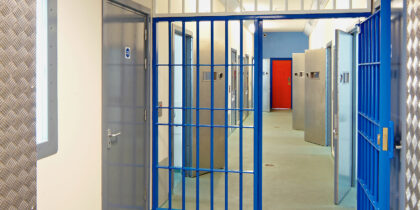


“Anxiety might not be a deemed a normal feeling outside. It’s a normal feeling in jail. Everyone’s anxious. You’re conditioned with that. It doesn’t go away in a day as soon as you walk out the gate.”
Someone is released from prison every 10 minutes. What comes to mind when you picture that moment? A reunion with family? Hugs from loved ones? Joy, freedom, relief? These images are real, but they are only part of the story. For many, release means stepping into anxiety with nowhere to sleep, no money in your pocket, and an uncertain future. It means being overwhelmed by things that once felt simple — commuting through a crowded station, buying a mobile phone, or sitting in a busy café. Struggling with mental health is an unspoken part of life after prison.
At Switchback, we’ve long seen how important mental health and wellbeing are when people leave prison. We teamed up with Toynbee Hall researcher Rushaa Hamid and our Experts by Experience (EBE) board to look at this properly. The conversations were open and wide-ranging, and they felt special. Our members celebrated each other’s growth, laughed together, shared the joint challenges they’d faced, and opened up about the hardest parts of trying to find their feet again after prison.
Of course, it’s impossible to capture the full depth of those conversations in a written report. But we’re proud that the report we published in 2024 reflects their spirit. Reading it gives a glimpse of what our members shared: the constant hyper-vigilance, the weight of trauma, and the deep mistrust of others. It shows how hard it is to think about mental health when you’re also facing homelessness, unemployment, or the threat of recall and violence. Many EBE members felt they had to carry these burdens alone due to the social and cultural expectations placed on them as young men. When they did reach out for support, the services they encountered often felt distant and lacking in the warmth and understanding they needed. These realities are too often hidden, but they shape life after prison in powerful ways, as these Expert by Experience members explain in the report:
“Every person I have ever been emotionally vulnerable with has betrayed me. I don’t trust anything or anyone and institutions are at the bottom of that list. I have no reason to trust them. They’ve never done anything which has benefitted me.”
“For some of us that [anxiety and hypervigilance] was already instilled in us before we went to jail. You already on alert anyway. You go to jail, crammed in a building and it’s even worse. You come out and it’s even worse.”
To us, these stories are a sharp reminder that behind the statistics on violence, reoffending and crime are real people with complex lives. People living with poor mental health, mistrust and loneliness. It sounds obvious, but too often the system that is meant to support prison leavers seems to forget this. When we expect people to ‘rehabilitate’ and ‘change their lives’ after prison, we have to recognise the journey they must take to get there. Human beings are not machines that can be pushed along a conveyor belt of rehabilitation, ticking boxes until they come out looking the way society expects them to. Especially when these services are so often understaffed, underfunded, or lacking in real understanding.
“Treat us as human not caseloads. Build a relationship with people you’re going to see better results.”
If we want to support more people on that journey of change, we need a system that responds to their individual needs. One that builds on their desire to live life differently with positivity, encouragement and practical support. This isn’t just about adding more mental health contracts or provision. It’s about rethinking prison resettlement entirely, and putting the needs and humanity of people at its heart.
We know that relationships must sit at the heart of change. Small organisations like Switchback, offering meaningful one-to-one support, can make the difference during the difficult transition after release. But relationships alone aren’t enough, people also need the basics in place: somewhere stable to live and a way to earn a living. Alongside this foundation, we must invest in specialist mental health support that is available both immediately after release and in the years that follow. Long term, we need cultural reform across the probation system, shifting it back towards rehabilitation and keeping people out of prison, not simply enforcing compliance.
As one Expert by Experience said, “Right now the foundations are outdated, we need fresh perspective and new eyes on it to change the foundation and update and revitalise it. Right now they just do this paper and that paper but you’re not really sorting the person, just the way it looks.”
Ultimately if we want prison leavers to thrive and to build a safer society for everyone, we must build a system rooted in humanity, not bureaucracy. One that sees the person first, and walks with them on their journey of change.
Daniel Rajan Mills is Public Affairs and Policy Lead at Switchback. All quotes from Switchback Expert by Experience members.